How Do Moisturisers Work?
Updated: Aug 8
Moisturisers are among the most widely used skincare products, yet they're also one of the most misunderstood.
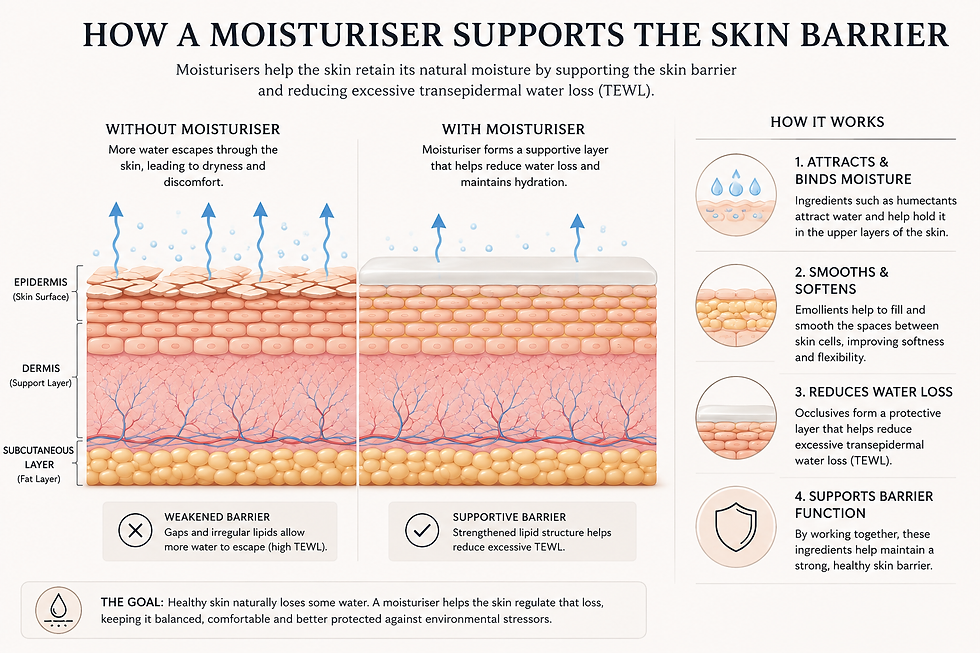
Many people assume that moisturisers simply "add moisture" to the skin. In reality, healthy skin already contains water. The primary role of a moisturiser is to help the skin retain that water, support the skin barrier and reduce excessive moisture loss.
Not all moisturisers work in the same way. Different formulations use different combinations of ingredients to support hydration, improve skin comfort and maintain barrier function. In this guide, we'll explain how moisturisers work, why they play such an important role in healthy skin and what makes one formulation different from another.
If you're new to skin barrier science, we recommend starting with our Skin Barrier: The Complete Guide.
What Does a Moisturiser Actually Do?
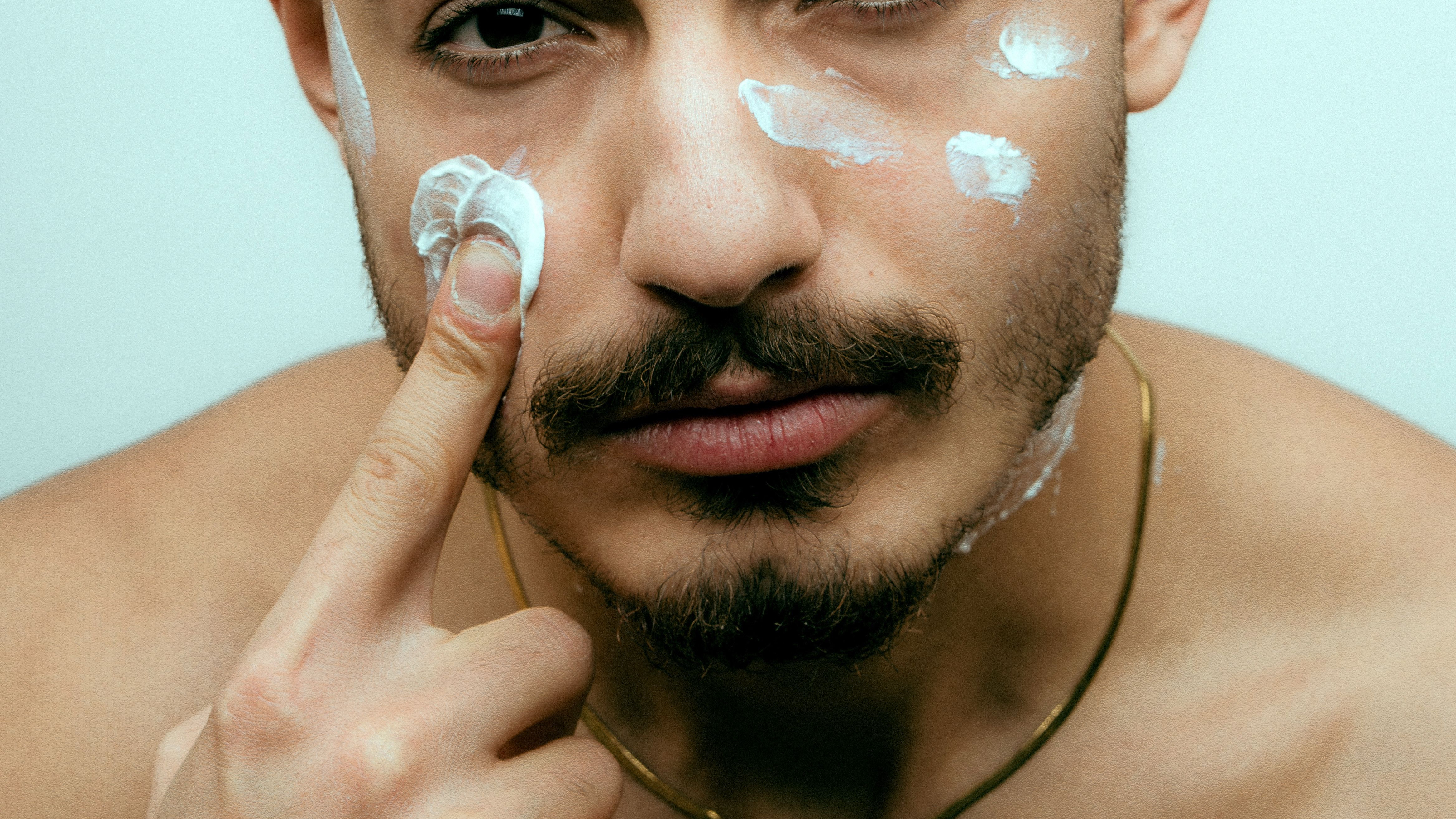
Despite the name, moisturisers don't usually add large amounts of water to your skin.
Instead, their primary role is to help the skin retain the water it already contains.
Healthy skin naturally receives water from the deeper layers of the body. A healthy skin barrier regulates how quickly that water evaporates from the skin's surface through transepidermal water loss (TEWL).
When the skin barrier becomes compromised, water escapes more quickly, leaving the skin feeling dry, tight or uncomfortable.
A moisturiser helps support the skin barrier, reducing excessive moisture loss while improving the skin's ability to remain soft, smooth and comfortable (Rawlings and Harding, 2004).
Why Healthy Skin Still Loses Water
One of the biggest misconceptions in skincare is that healthy skin shouldn't lose water.
In reality, some water loss is completely normal. Transepidermal water loss is a natural physiological process that occurs continuously throughout the day. The goal of skincare isn't to stop TEWL completely, but to help the skin regulate moisture loss so that hydration is maintained without disrupting normal skin function (Proksch, Brandner and Jensen, 2008). This is why moisturisers are designed to support the skin barrier rather than create a completely waterproof seal.
Read next: What Is Transepidermal Water Loss (TEWL)?
Do All Moisturisers Work the Same?
No - Although most moisturisers have the same overall goal, different formulations achieve it in different ways. Some focus on attracting water to the outer layers of the skin, while others help smooth the skin's surface or reduce excessive evaporation by supporting the skin barrier.
Rather than relying on a single ingredient, well-formulated moisturisers typically combine multiple ingredient types to improve hydration and maintain skin comfort.
When Should You Apply Moisturiser?
For most people, the ideal time to apply moisturiser is after cleansing, while the skin is still slightly damp.
At this stage, a small amount of water remains on the skin's surface. Applying a moisturiser while the skin is damp can help support hydration by working alongside this moisture and reducing excessive evaporation.
Consistency is also important. Regular application as part of a daily skincare routine generally provides better long-term results than occasional use.
Formulator's Insight
"A common assumption is that a moisturiser works simply because it feels rich or heavy on the skin.
From a formulation perspective, however, performance depends on how effectively a product supports the skin barrier and helps regulate moisture loss - not how thick it feels.
This is why two moisturisers with a similar texture can perform very differently. The choice and balance of ingredients determine how well a formulation supports hydration, skin comfort and long-term barrier function."
Key Takeaways
Moisturisers help the skin retain its natural water rather than simply adding moisture.
Supporting the skin barrier is one of the primary ways moisturisers improve hydration.
Healthy skin naturally loses water through TEWL, but excessive moisture loss can contribute to dryness and discomfort.
Different moisturisers use different ingredient combinations to support hydration and barrier function.
Applying moisturiser to slightly damp skin can help improve moisture retention.
Related Guides
Frequently Asked Questions
Do moisturisers actually hydrate your skin?
Moisturisers don't usually add significant amounts of water to the skin. Instead, they help the skin retain its natural moisture by supporting the skin barrier and reducing excessive transepidermal water loss (TEWL).
Should I apply moisturiser to damp or dry skin?
For most people, applying moisturiser to slightly damp skin after cleansing helps retain surface moisture and supports hydration more effectively than applying it to completely dry skin.
Can moisturiser repair the skin barrier?
A moisturiser can't instantly repair a damaged skin barrier, but a well-formulated product can help support barrier function, reduce excessive moisture loss and create an environment that allows the skin to recover over time.
Why does my skin still feel dry after using moisturiser?
This can happen if the skin barrier is compromised, the product isn't suited to your skin's needs, or your skin is dehydrated rather than simply dry. Consistent barrier-supportive skincare may help improve skin comfort over time.
Do oily skin types need moisturiser?
Yes. Oily skin still loses water through transepidermal water loss (TEWL) and can become dehydrated. Using an appropriate moisturiser can help maintain hydration and support the skin barrier without necessarily making the skin feel greasy.
What's the difference between a moisturiser and a face oil?
Although both can support healthy skin, moisturisers are generally formulated to improve hydration and barrier function through a combination of ingredient types, while face oils primarily provide emollient and protective benefits.
Scientific References
Lodén, M. (2003). Role of topical emollients and moisturisers in the treatment of dry skin barrier disorders. American Journal of Clinical Dermatology, 4(11), pp. 771–788.
Madison, K.C. (2003). Barrier function of the skin: "la raison d'être" of the epidermis. Journal of Investigative Dermatology, 121(2), pp. 231–241.
Proksch, E., Brandner, J.M. and Jensen, J.-M. (2008). The skin: an indispensable barrier. Experimental Dermatology, 17(12), pp. 1063–1072.
Rawlings, A.V. and Harding, C.R. (2004). Moisturization and skin barrier function. Dermatologic Therapy, 17(Suppl. 1), pp. 43–48.