

What Is Transepidermal Water Loss (TEWL)?
Updated: 2 days ago
Your skin is constantly losing water.
Although this may sound surprising, it's a completely normal biological process that occurs every minute of every day. Known as transepidermal water loss (TEWL), this natural movement of water is a normal part of skin physiology.
Problems arise when water leaves the skin faster than the skin barrier can regulate it. Excessive transepidermal water loss can contribute to dryness, tightness, rough texture and increased sensitivity, making TEWL one of the most important concepts in modern skincare and skin barrier science (Proksch, Brandner and Jensen, 2008).
Understanding TEWL helps explain why moisturisers work, why the skin barrier is so important and why healthy skin is about much more than simply drinking more water.
In this guide, we'll explain what transepidermal water loss is, why it happens, what increases it and how supporting your skin barrier can help maintain healthy, comfortable skin.
If you'd like a broader understanding of how the skin barrier works and why it matters, start with our Skin Barrier: The Complete Guide.
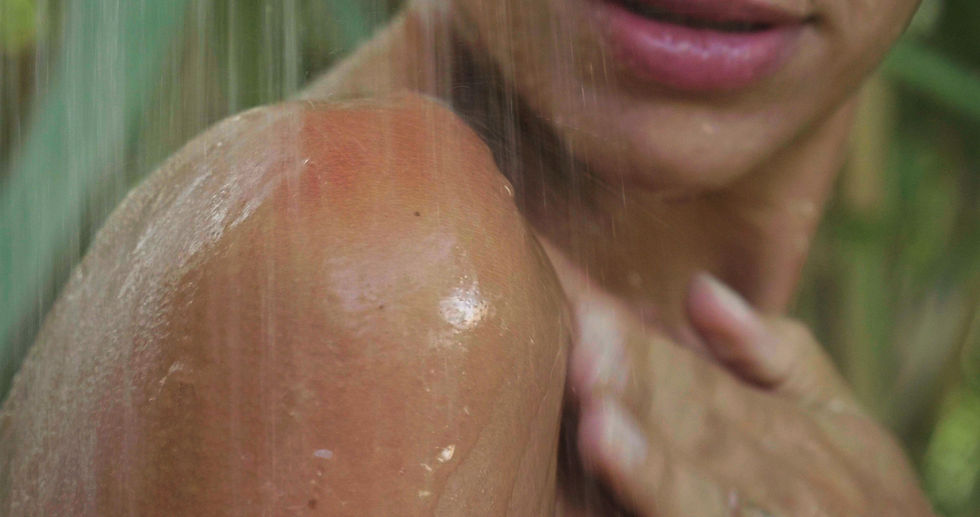
What Is Transepidermal Water Loss (TEWL)?
Transepidermal water loss (TEWL) is the natural movement of water from the deeper layers of the skin through the epidermis before it evaporates into the surrounding air.
This process occurs continuously throughout life and is an essential part of normal skin physiology. Every person experiences transepidermal water loss, regardless of age or skin type (Fluhr et al., 2006).
Importantly, TEWL is NOT the same as sweating.
Sweating is an active process controlled by sweat glands to help regulate body temperature.
Transepidermal water loss, by contrast, is a passive process. Water slowly diffuses through the skin before evaporating from the surface, even when you're sitting still in a cool room.
A healthy skin barrier carefully regulates how quickly this water is lost.
When the barrier is functioning normally, water loss remains within healthy limits, allowing the skin to stay hydrated, flexible and comfortable.
When the barrier becomes compromised, however, water may escape more rapidly than usual. Increased TEWL is therefore commonly used as an indicator of impaired skin barrier function.
(Proksch, Brandner and Jensen, 2008).
Why Does Water Leave the Skin?
The human body is made up largely of water, and the skin is no exception.
Water is continuously supplied to the deeper layers of the skin through the body's circulation. From there, it gradually moves upwards through the epidermis before reaching the stratum corneum, the outermost layer of the skin.
Some of this water naturally evaporates into the surrounding environment. This is transepidermal water loss.
Rather than trying to stop this process entirely, the skin barrier works to regulate it.
The highly organised lipid matrix between corneocytes acts as a selective barrier, slowing the movement of water while allowing enough evaporation for healthy skin function (Madison, 2003).
The skin barrier helps limit excessive water loss while maintaining the normal movement of water through the skin.
When barrier function is impaired, water can escape more readily, contributing to dryness, roughness and reduced skin hydration.
TEWL therefore occurs naturally, while unusually high TEWL can indicate that the skin barrier is not regulating water loss effectively.
Is Transepidermal Water Loss Normal?
Yes.
Many people assume that water leaving the skin is a sign that something is wrong. In reality, transepidermal water loss is a completely normal and essential biological process.
Every healthy person loses a small amount of water through the skin every day, even when they are not sweating.
The goal of healthy skincare is not to eliminate TEWL.
Instead, the aim is to support healthy skin-barrier function and avoid excessive water loss.
Increased TEWL can become relevant when it reflects impaired barrier function or excessive water loss.
Research has consistently shown that increased transepidermal water loss is associated with impaired skin barrier function and is commonly observed in dry skin and several skin disorders (Fluhr et al., 2006; Proksch, Brandner and Jensen, 2008).

What Increases Transepidermal Water Loss?
Although transepidermal water loss is a normal biological process, several internal and external factors can increase the rate at which water escapes from the skin.
In many cases, it isn't one single factor that leads to excessive TEWL. Instead, repeated exposure to environmental stressors, an impaired skin barrier or an unsuitable skincare routine can gradually reduce the skin's ability to regulate moisture effectively.
Understanding these factors can help you make informed skincare choices that support healthy barrier function.
A Compromised Skin Barrier
The most significant factor influencing TEWL is the condition of the skin barrier itself.
A healthy stratum corneum contains a highly organised lipid matrix composed primarily of ceramides, cholesterol and free fatty acids. This structure slows the movement of water through the skin while helping maintain hydration (Madison, 2003).
When the barrier becomes disrupted, water escapes more readily, leading to increased transepidermal water loss and leaving the skin more susceptible to dryness, tightness and irritation (Proksch, Brandner and Jensen, 2008).
Learn more: Skin Barrier: The Complete Guide
Harsh Cleansing
Cleansing is an essential part of healthy skincare, but using harsh cleansers or washing too frequently can remove some of the lipids that contribute to normal barrier function.
Over time, this may increase TEWL, particularly if the skin is not given sufficient opportunity to replenish its natural protective lipids.
If your skin consistently feels tight after cleansing, it may be a sign that your routine is disrupting your barrier more than necessary.
Over-Exfoliation
Exfoliation removes dead skin cells from the skin's surface and can improve texture and radiance when used appropriately.
However, excessive physical or chemical exfoliation may temporarily disrupt the organisation of the stratum corneum, allowing water to escape more rapidly while increasing skin sensitivity (Elias, 2005).
Healthy skin benefits from balance. More exfoliation does not necessarily lead to healthier skin.
Environmental Conditions
The environment has a direct influence on transepidermal water loss.
Cold weather, low humidity and strong winds all increase the gradient between the water inside your skin and the surrounding air. As a result, water evaporates more readily from the skin's surface (Rawlings and Harding, 2004).
This is one reason why many people experience drier skin during winter or in air-conditioned environments.
Ultraviolet (UV) Exposure
Excessive ultraviolet exposure can affect both the structure and function of the skin barrier.
Over time, UV radiation contributes to oxidative stress and may impair the skin's ability to regulate moisture effectively, increasing transepidermal water loss while accelerating visible signs of skin ageing (Proksch, Brandner and Jensen, 2008).
Protecting the skin from excessive sun exposure is therefore an important part of maintaining healthy barrier function.
Ageing
As the skin ages, its ability to recover from environmental stress gradually changes.
Research suggests that ageing skin may produce fewer protective lipids and exhibit slower barrier recovery, both of which can contribute to increased TEWL and a greater tendency towards dryness (Farage, Miller and Maibach, 2013).
While ageing is a natural process, supporting the skin barrier through appropriate skincare can help maintain skin comfort over time.
Formulator's Insight
“One of the biggest misconceptions is that increased water loss simply means the skin needs ‘more moisture.’ TEWL occurs naturally, so the aim isn't to stop water leaving the skin entirely. From a formulation perspective, the focus is on supporting the skin barrier and helping limit excessive moisture loss.
This is why formulators consider not only how a product feels on the skin, but also the types of ingredients used to provide emollient and occlusive support. A rich-feeling product isn't necessarily the same thing as a well-designed barrier-supportive formulation.”

Signs Your Skin May Be Losing Too Much Moisture
Because transepidermal water loss is invisible, you can't feel TEWL itself. Instead, you experience the effects that excessive water loss has on your skin.
When the skin barrier can no longer regulate moisture effectively, hydration levels begin to fall. As the outer layers of the skin lose water, they become less flexible and less able to perform their normal protective functions.
Common signs that your skin may be experiencing excessive moisture loss include:
Persistent dryness
Tightness, particularly after cleansing
Rough or flaky skin
Increased sensitivity
Skin that appears dull or lacks radiance
Mild itching or discomfort
Fine dehydration lines
Skincare products that suddenly sting or feel irritating
These symptoms are not unique to increased TEWL and can have many different causes. However, they are commonly associated with impaired skin barrier function and often improve when the barrier is supported appropriately (Egawa and Kabashima, 2018).
TEWL and Dry Skin
Although increased TEWL is commonly associated with dry skin, they are not the same thing. Dry skin is a skin type characterised by lower natural oil production, while TEWL describes the movement of water through the skin. Understanding the difference helps explain why some people experience dehydration even if they have oily skin.
Can You Have Increased TEWL with Oily Skin?
Yes.
One of the biggest misconceptions in skincare is that oily skin cannot become dehydrated.
In reality, oil and water perform different roles within the skin.
Sebum helps lubricate the skin's surface, while water maintains flexibility, comfort and many of the skin's normal biological processes.
Someone with oily skin can still experience increased transepidermal water loss if their skin barrier has been compromised through harsh cleansing, excessive exfoliation or environmental stress.
This is one reason why barrier-supportive skincare is important for every skin type—not just dry skin.
How Do Moisturisers Help Reduce TEWL?
Moisturisers help reduce excessive TEWL by combining ingredients that attract water, soften the skin and help reduce moisture loss. Different ingredient types perform different roles, which is why two moisturisers can behave very differently on the skin.
Read next: How Moisturisers Work
Formulator's Insight
“Moisturising isn't simply about adding more water to a formulation. How effectively the skin retains water also matters, which is why emollient and occlusive ingredients are important when formulating for dry or moisture-depleted skin.
At LOW-KEY, this principle influences our waterless approach. Our concentrated oils and balms contain no added water and can be applied to slightly damp skin. The water on the skin provides hydration, while the oils, butters and waxes provide emollient and occlusive support that can help soften the skin and reduce moisture loss.”

Can Transepidermal Water Loss Be Measured?
Yes. In dermatology research and cosmetic science, transepidermal water loss can be measured using specialised instruments known as tewameters.
A tewameter measures the amount of water vapour evaporating from the skin's surface under controlled environmental conditions. Rather than measuring hydration directly, it measures how quickly water is leaving the skin, making it one of the most widely used methods for assessing skin barrier function in both clinical research and cosmetic product testing (Fluhr et al., 2006) - generally speaking:
Lower TEWL values suggest the skin barrier is regulating moisture effectively.
Higher TEWL values may indicate impaired barrier function or increased moisture loss.
However, TEWL measurements should always be interpreted in context. Factors such as body site, age, environmental temperature, humidity and recent skincare application can all influence the results.
For this reason, TEWL is primarily used as a research and clinical assessment tool rather than something people measure routinely at home.
The Science Behind TEWL
Healthy skin is constantly regulating the movement of water between the body and the external environment. The stratum corneum acts as a selectively permeable barrier, slowing water loss through its highly organised structure of corneocytes surrounded by ceramides, cholesterol and free fatty acids (Madison, 2003).
When this structure becomes disrupted, water escapes more rapidly, increasing transepidermal water loss and reducing the skin's ability to maintain hydration. For this reason, TEWL is widely used in dermatological research as an indicator of skin barrier function rather than skin hydration alone (Fluhr et al., 2006).
Rather than trying to eliminate TEWL, modern skincare aims to support the skin barrier so that water loss remains within healthy physiological limits.
Key Takeaways
Transepidermal water loss (TEWL) is the natural movement of water from the skin into the surrounding air.
TEWL is a normal and essential part of healthy skin function.
Excessive TEWL is commonly associated with a weakened skin barrier and may contribute to dryness, tightness and increased sensitivity.
Factors such as harsh cleansing, over-exfoliation, UV exposure and low humidity can all increase TEWL.
Moisturisers help support the skin barrier and reduce excessive moisture loss rather than eliminating TEWL completely.
Waterless oils and balms can be applied to slightly damp skin, combining water on the skin with emollient and occlusive ingredients that help soften the skin and reduce moisture loss.
Continue Reading
Explore more evidence-based skincare guides:
Frequently Asked Questions
What is transepidermal water loss (TEWL)?
Transepidermal water loss is the natural movement of water from the deeper layers of the skin through the epidermis before it evaporates from the skin's surface.
Is transepidermal water loss normal?
Yes. Everyone experiences TEWL every day. Healthy skin naturally loses small amounts of water as part of its normal biological function.
Is TEWL the same as sweating?
No. Sweating is an active process controlled by sweat glands to regulate body temperature. TEWL is a passive process where water slowly diffuses through the skin and evaporates from the surface.
Can moisturisers stop TEWL?
No. TEWL is a normal process, so the aim isn't to stop water loss completely. Moisturisers can help reduce excessive water loss by supporting the skin barrier.
Does drinking more water reduce TEWL?
Drinking enough water is important for overall health, but hydration alone does not regulate TEWL. The skin barrier plays the primary role in controlling how quickly water leaves the skin.
Can oily skin have high TEWL?
Yes. Oil production and water loss are different processes. Even oily skin can experience increased TEWL if the skin barrier becomes compromised.
Scientific References
Elias, P.M. (2005) Stratum corneum defensive functions: an integrated view. Journal of Investigative Dermatology, 125(2), pp. 183–200.
Fluhr, J.W., Darlenski, R. and Angelova-Fischer, I. (2006) Transepidermal water loss, stratum corneum hydration and skin surface pH in dermatology. Skin Pharmacology and Physiology.
Lodén, M. (2003) Role of topical emollients and moisturisers in the treatment of dry skin barrier disorders. American Journal of Clinical Dermatology.
Madison, K.C. (2003) Barrier function of the skin: "la raison d'être" of the epidermis. Journal of Investigative Dermatology, 121(2), pp. 231–241.
Proksch, E., Brandner, J.M. and Jensen, J.-M. (2008) The skin: an indispensable barrier. Experimental Dermatology, 17(12), pp. 1063–1072.
Rawlings, A.V. and Harding, C.R. (2004) Moisturization and skin barrier function. Dermatologic Therapy, 17(Suppl. 1), pp. 43–48.
