How to Heal a Tattoo Faster: 10 Tips for a Smooth Recovery
Updated: Aug 25
While you can't force a tattoo to heal faster, you can create the best possible environment for your skin to recover naturally. Good aftercare helps support the skin barrier, reduce unnecessary irritation and keep healing skin comfortable throughout the recovery process. In this guide, we'll explain what influences tattoo healing and the practical steps you can take to help your tattoo heal as efficiently as possible.
For a complete overview of tattoo healing, aftercare and long-term maintenance, explore our Tattoo Care Guide.
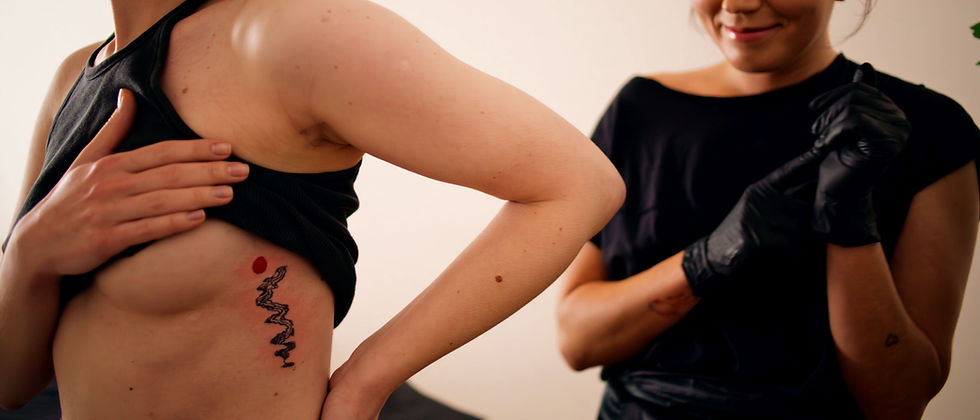
How to Heal a Tattoo Faster: What Affects Healing Time?
A tattoo will typically go through its initial stages of healing over the first few weeks, although the skin can continue recovering beyond this. The exact timeline varies depending on factors such as:
Tattoo size
Tattoo placement
Skin type
General health
Aftercare routine
Healing rates vary from person to person, but good aftercare can help create the best possible environment for recovery.
Formulator's Insight
"Healing isn't about applying more products - it's about reducing unnecessary stress on the skin. Consistent cleansing, light moisturising and avoiding friction or prolonged soaking create a better environment for the skin barrier to recover naturally."
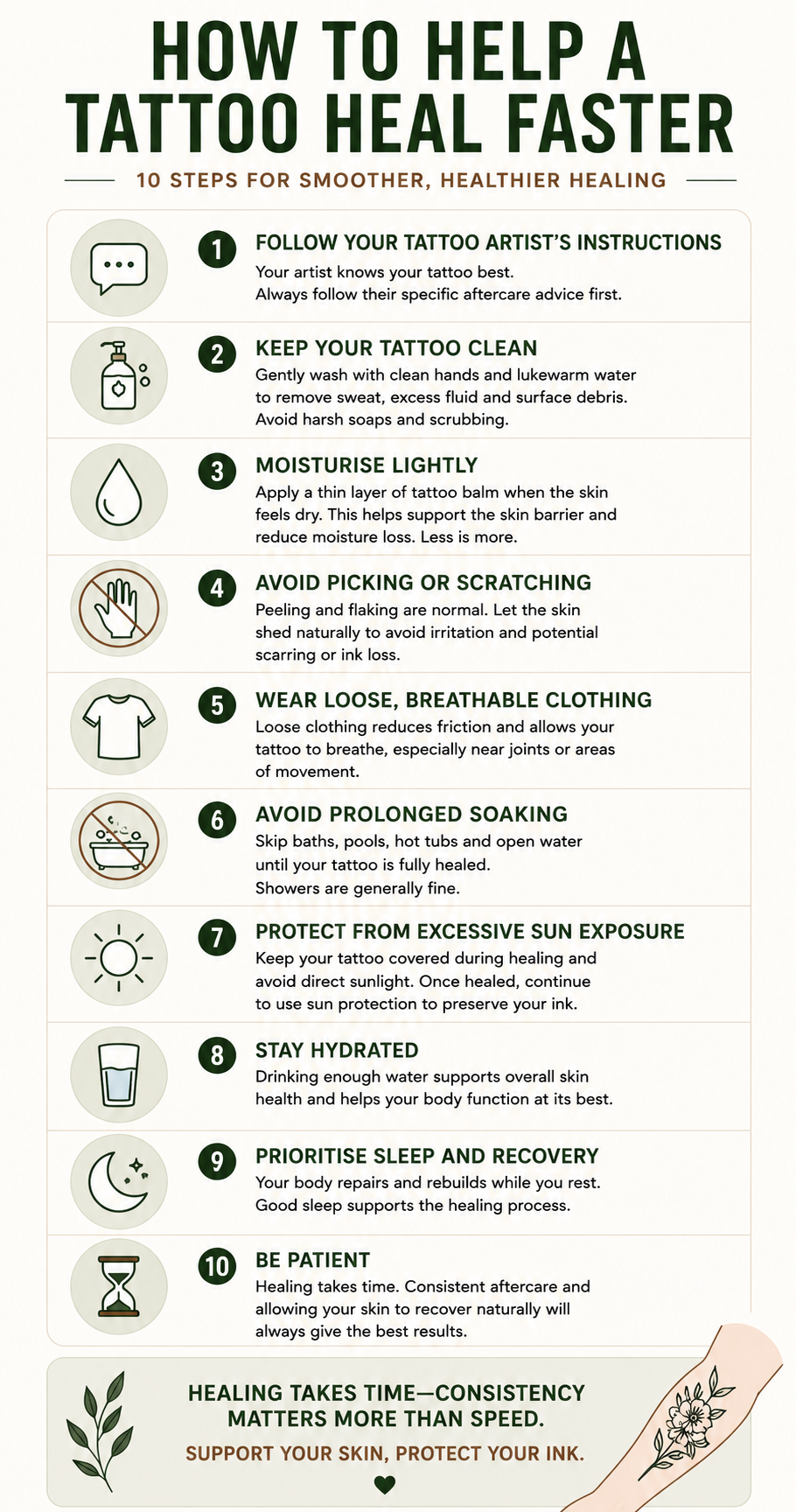
1. Follow Your Tattoo Artist's Instructions
Your tattoo artist understands the specific technique, placement and requirements of your tattoo.
While general aftercare advice can be helpful, always prioritise the instructions provided by your artist.
2. Keep Your Tattoo Clean
Cleanliness is one of the most important aspects of tattoo healing.
Gently washing the tattoo helps remove excess fluid, sweat and surface debris without disrupting the healing process. Avoid scrubbing the skin or using harsh cleansers that may cause unnecessary irritation.
3. Keep The Skin Comfortably Moisturised
Dry, tight skin can become uncomfortable during healing. Applying a thin layer of tattoo balm whenever the skin begins to feel dry can help support the skin barrier and reduce moisture loss.
The goal isn't to keep the tattoo constantly covered in product. A light application when needed is generally more beneficial than applying excessive amounts. If you're unsure how often to moisturise, Read our guide on How Often Should You Moisturise a New Tattoo?
4. Avoid Picking Or Scratching
As your tattoo heals, peeling and flaking are completely normal. Although it can be tempting, avoid picking at peeling skin or scratching itchy areas. Allowing the skin to shed naturally helps support the healing process.
5. Wear Loose, Breathable Clothing
Friction can irritate healing skin. Where possible, wear loose-fitting clothing that allows the tattoo to breathe and minimises rubbing against the area. This is particularly important for larger tattoos or tattoos located near joints and areas of frequent movement.
6. Avoid Prolonged Soaking
While gentle showers are generally fine, long baths, swimming pools, hot tubs and open water should be avoided until the tattoo has healed. Prolonged soaking can disrupt healing skin and may increase the risk of irritation or infection, particularly in shared or natural bodies of water.
If you're unsure when it's safe to return to swimming, read our guide on When Can You Swim After Getting a Tattoo?
7. Protect Your Tattoo From Excessive Sun Exposure
Fresh tattoos are particularly sensitive to sunlight. During the healing process, keep the tattoo covered where practical and avoid prolonged direct sun exposure. Once healed, protecting your tattoo from UV exposure can help maintain its appearance over time. Discover more ways to preserve your ink in our guide on Why Do Tattoos Fade? (And How to Keep Them Looking Vibrant).
8. Stay Hydrated
Staying adequately hydrated supports normal body and skin function during recovery. However, drinking extra water beyond your normal hydration needs hasn't been shown to make a tattoo heal faster.
9. Prioritise Sleep And Recovery
Sleep supports the body's normal immune and tissue-repair processes. Getting adequate rest can therefore support normal recovery while your tattoo heals.
10. Be Patient
One of the most overlooked aspects of tattoo healing is patience. The skin heals at its own pace. Trying to rush the process often leads to unnecessary irritation and complications. Consistent aftercare and allowing your skin the time it needs to recover can help avoid unnecessary irritation while the tattoo heals.

Signs Your Tattoo Is Healing Normally
During healing, it is common to experience:
Mild redness
Tenderness
Peeling
Flaking
Itching
Although these symptoms are usually part of normal healing, they should gradually improve over time. If redness, swelling or pain is worsening rather than improving, or you notice pus, open sores, fever or other signs of infection, seek advice from a qualified healthcare professional.
Recommended Product
Our Organic Tattoo Balm is formulated with 100% natural, COSMOS-certified organic ingredients in a concentrated waterless formula to help support the skin barrier, reduce dryness and keep healing skin comfortable - best for:
Supporting the skin barrier
Reducing dryness
Fresh tattoos
Long-term tattoo care
Final Thoughts
There is no shortcut to tattoo healing, but creating the right environment for your skin can make the process smoother and more comfortable.
Keep your tattoo clean, moisturised and protected, avoid unnecessary irritation, and give your body the time it needs to recover naturally.
For a complete overview of tattoo healing, aftercare and long-term maintenance, read our Tattoo Care Guide.
Related Guides

Frequently Asked Questions
Can a tattoo heal in a week?
A tattoo may look noticeably better after the first week, but the healing process usually continues beyond this point. Healing time varies depending on the tattoo, its location and the individual, so a tattoo shouldn't be assumed to be fully healed after seven days.
Does moisturising help tattoos heal faster?
Moisturising does not directly speed up healing, but it can help support the skin barrier and reduce dryness throughout the recovery process.
Is peeling a sign my tattoo is healing?
Yes. Peeling and flaking are common stages of the healing process.
Does drinking water help tattoo healing?
Staying adequately hydrated supports normal body and skin function during recovery, but drinking extra water beyond your normal hydration needs hasn't been shown to make a tattoo heal faster.
Can I exercise while my tattoo heals?
Light activity may be possible depending on the tattoo's location, although excessive sweating and friction can sometimes irritate healing skin. For more detailed advice, read Can You Exercise After Getting a Tattoo?
What helps a tattoo heal the fastest?
There is no way to instantly heal a tattoo. The best approach is to keep it clean, moisturise lightly, avoid unnecessary irritation and allow your skin time to recover naturally.
Does tattoo balm speed up healing?
Tattoo balm doesn't accelerate the body's natural healing process, but it can help support the skin barrier, reduce dryness and keep healing skin comfortable.
What slows tattoo healing?
Picking at the skin, excessive friction, prolonged soaking, too much sun exposure and inconsistent aftercare can all interfere with comfortable healing.
Should I let my tattoo dry out?
Excessive dryness can make healing skin feel tight and uncomfortable. Applying a thin layer of moisturiser or tattoo balm when needed helps support the skin barrier.
Does sleep affect tattoo healing?
Sleep supports the body's normal immune and tissue-repair processes, so adequate rest is sensible while a tattoo heals. However, there isn't good evidence that sleeping more than your normal needs will make a tattoo heal faster.