Why Does My Tattoo Itch? Causes, Relief & When to Be Concerned
Updated: Aug 25
Mild itching is common while a tattoo heals, particularly as the skin begins to peel and recover. As your skin repairs itself, it's common to experience mild itching, particularly during the peeling stage. Although it can be uncomfortable, scratching can interfere with healing and should be avoided. In this guide, we'll explain why tattoos itch, how long it usually lasts, how to relieve it safely and when it may be worth seeking professional advice.
For a complete overview of tattoo healing, aftercare and long-term maintenance, explore our Tattoo Care Guide.

Why Does My Tattoo Itch?
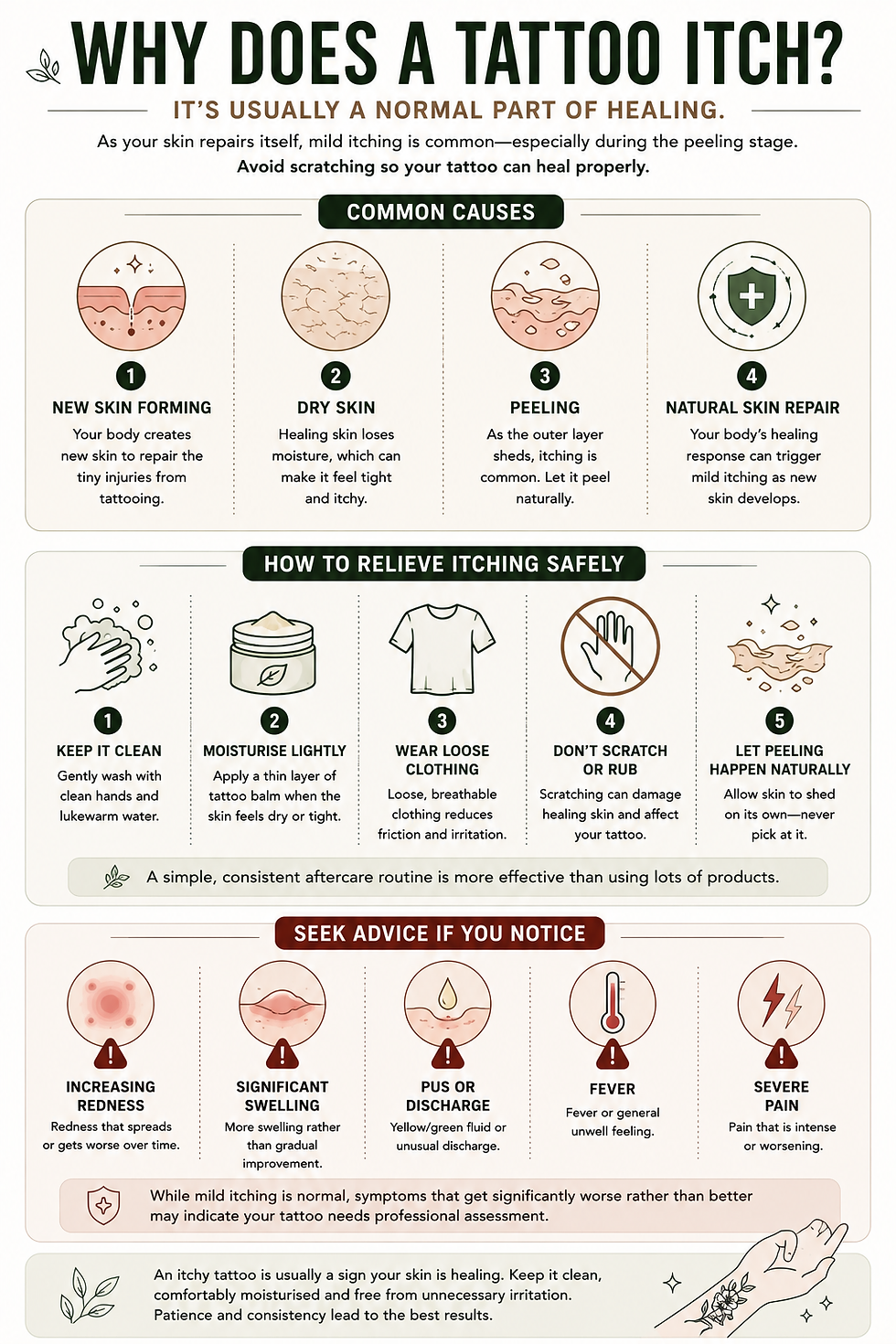
Tattooing creates numerous small punctures in the skin, triggering the body's normal healing response. As the area recovers, the skin can become dry, tight and itchy. This combination of healing processes commonly leads to itching, particularly during the first couple of weeks. For most people, mild itching is a normal part of recovery.
Formulator's Insight
"Itching is often linked to changes in the skin barrier as it heals. As moisture is lost and new skin forms, the surface can feel tighter and drier, making itching more noticeable. Supporting the skin barrier with gentle aftercare can help keep healing skin more comfortable."
When Does Tattoo Itching Usually Start?
Many people notice itching after the first few days, often as peeling begins.
This commonly happens during the stage when the skin feels:
Tight
Dry
Slightly flaky
Less tender than the first few days
Learn more in Tattoo Healing Stages: What to Expect Day by Day.
Why Is My Tattoo So Itchy?
Several factors can contribute to itching during healing.
Dry Skin
Healing skin naturally loses moisture. When the skin becomes too dry, itching often becomes more noticeable.
Peeling
As the outer layer of skin sheds, itching is common. Allow peeling skin to come away naturally rather than picking at it.
Skin Repair
Your body's natural healing response can trigger mild itching as new skin develops beneath the surface.
How To Relieve Tattoo Itching
If your tattoo becomes itchy, the aim is to reduce dryness and irritation without disrupting the healing process.
Keep the area clean.
Apply a thin layer of moisturiser or tattoo balm when the skin feels dry or tight.
Wear loose-fitting clothing.
Avoid scratching or rubbing the tattoo.
Allow peeling skin to shed naturally.
A simple, consistent aftercare routine is usually more effective than frequently changing products or applying excessive amounts.
Choosing a Natural Tattoo Balm
If your tattoo feels dry or tight, applying a thin layer of tattoo balm can help keep the skin comfortable while it continues to heal. Our Organic Tattoo Balm is formulated with 100% natural, COSMOS-certified organic ingredients, including shea butter, coconut oil, jojoba oil and argan oil. Its waterless formula combines botanical oils and butters to help reduce moisture loss and keep dry tattooed skin feeling comfortable. Creating a rich balm that helps reduce moisture loss while keeping the skin feeling comfortable throughout healing - suitable for both fresh tattoos and long-term tattoo care.
What Should You Avoid?
To help minimise irritation, avoid:
Scratching the tattoo
Picking peeling skin
Excessive rubbing
Applying unnecessary amounts of product
Prolonged soaking
If your tattoo feels uncomfortable, keeping your aftercare routine simple is often the best approach.
Read How to Heal a Tattoo Faster for more healing tips.
When Should You Be Concerned?
While mild itching can occur during healing, seek advice from a healthcare professional if you experience:
Rapidly increasing redness
Significant swelling
Pus or unusual discharge
Fever
Severe pain
Itching that continues to worsen rather than gradually improve
Symptoms that become significantly worse rather than better may indicate that your tattoo needs professional assessment.
Final Thoughts
An itchy tattoo is usually a normal part of healing and, in most cases, simply reflects your skin repairing itself. Keeping the tattoo clean, comfortably moisturised and free from unnecessary irritation can help make the healing process more comfortable while allowing your skin to recover naturally.
Continue Reading
Frequently Asked Questions
Is itching a sign my tattoo is healing?
Mild itching commonly occurs while a tattoo heals, particularly during peeling. However, itching alone doesn't tell you whether a tattoo is healing normally, so pay attention to any other symptoms.
How long does tattoo itching last?
Many people experience itching during the first couple of weeks of healing, although recovery varies from person to person.
Can I scratch my tattoo?
It's best to avoid scratching. Scratching may damage healing skin and interfere with the recovery process.
Does moisturising help with tattoo itching?
Keeping the skin comfortably moisturised can help reduce dryness, which is a common cause of itching.
Learn more in How Often Should You Moisturise a Tattoo?
Is a very itchy tattoo normal?
Mild to moderate itching is common. If itching is severe or accompanied by increasing redness, swelling or discharge, seek professional advice.
Why does my tattoo itch more at night?
Itching can sometimes feel more noticeable at night. If the tattoo feels dry or tight, follow your aftercare instructions and use a suitable moisturiser if recommended. Severe or worsening itching, particularly with other symptoms, should be assessed by a healthcare professional.
Can moisturising stop tattoo itching?
Moisturising won't eliminate itching completely, but it can help reduce dryness, which is one of the most common causes of discomfort during healing.
Is itching worse during peeling?
It can be. Itching commonly occurs during the peeling stage as the skin continues to recover. Avoid scratching or pulling away flaking skin.
Why shouldn't I scratch my tattoo?
Scratching can damage healing skin, disturb peeling skin and potentially interfere with the appearance of the healed tattoo.
Can an old tattoo become itchy?
Occasionally, older tattoos may itch due to dry skin, irritation or unrelated skin conditions. If itching is persistent or accompanied by other symptoms, seek medical advice.