

Natural vs Synthetic Hair Products: What's the Difference?
Updated: Aug 3
Choosing between natural vs synthetic hair products isn't always straightforward. While both can help style and care for your hair, they often rely on very different ingredients and formulation philosophies.
Natural hair products typically use botanical oils, plant waxes and mineral clays, whereas synthetic products often rely on laboratory-created ingredients to deliver specific styling characteristics such as strong hold, high shine or extended shelf life. Neither approach is inherently better. Understanding how they differ can help you choose products that match your hair type, styling goals and personal preferences. In this guide, we'll explore the key differences between natural and synthetic hair products, their potential advantages and limitations, and how to choose the right option for your hair and lifestyle.
If you're still comparing different product types, start with our guide on How to Choose the Right Hair Product.
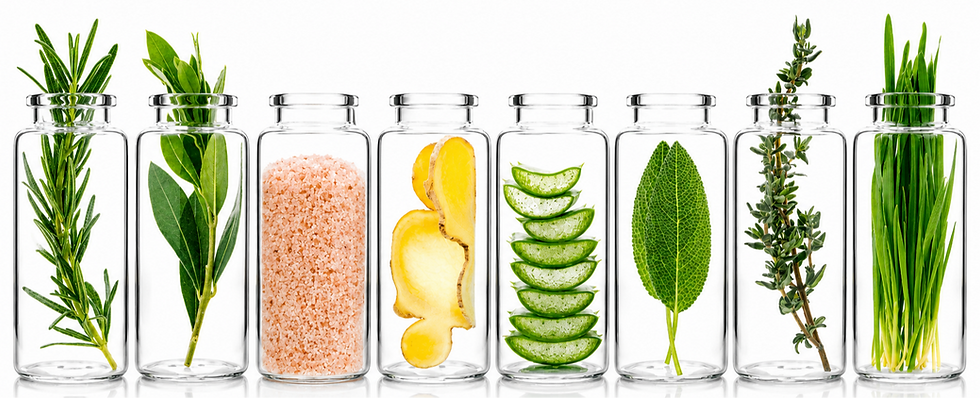
What Are Natural Hair Products?
Natural hair products are formulated primarily with ingredients derived from plants, minerals and other naturally occurring sources. These ingredients are often selected because they perform multiple functions, helping to style, condition and support the overall appearance of the hair within the same formulation.
Rather than relying on a large number of engineered ingredients, many natural formulations combine botanical oils, plant butters, mineral clays and natural waxes to achieve the desired performance.
Common examples include:
Plant-Based Waxes
What Are Synthetic Hair Products?
Synthetic hair products are formulated using ingredients that are chemically manufactured or extensively modified through industrial processes. These ingredients are often chosen because they can deliver highly specific performance characteristics, such as maximum hold, enhanced shine, water resistance or extended shelf life. Modern synthetic formulations can be extremely effective, although they often require a wider range of ingredients to achieve multiple functions within the same product.
Further Reading:
Natural vs Synthetic Hair Products: The Key Differences
Formulator's Insight
"Whether an ingredient is natural or synthetic tells you where it comes from - not whether it's automatically better. As a formulator, the more important question is why an ingredient is included. At LOW-KEY, we choose naturally derived ingredients because they allow us to create simple, multifunctional formulations that align with our philosophy of working with the body rather than against it."

Why People Choose Natural Hair Products
Simpler Ingredient Lists
Many people prefer products that contain ingredients they can easily recognise and understand.
Ingredients such as jojoba oil, shea butter and bentonite clay often feel more familiar than long lists of synthetic compounds.
Multi-Functional Ingredients
Natural ingredients often serve multiple purposes - for example:
Jojoba Oil can help improve softness and shine.
Shea Butter can help condition the hair.
Bentonite Clay can help create texture and volume.
This allows products to perform several functions simultaneously.
Fewer Potential Irritants
Many people are drawn to natural hair products because they prefer formulations built around oils, butters, clays and waxes rather than large numbers of synthetic additives. While many synthetic ingredients are considered safe and effective, scientific reviews have identified certain fragrances, preservatives and other cosmetic ingredients as common causes of allergic contact dermatitis and scalp irritation in susceptible individuals. For those with sensitive skin or a history of reactions, simpler formulations can sometimes make ingredient selection easier and more transparent. If you're interested in ingredient transparency, you may also find our guide on Hair Oil Benefits useful.
Sustainability Considerations
Many consumers choose natural products because they prefer ingredients derived from renewable sources. Natural grooming brands are also more likely to emphasise refill systems, recyclable packaging and lower-impact production methods.
Personal Preference
For many people, the appeal of natural grooming products simply aligns with a broader interest in conscious living and ingredient transparency.

Why People Choose Synthetic Hair Products
Strong Hold
Synthetic polymers can often deliver extremely strong hold, making them popular in certain styling products.
Long Shelf Life
Synthetic preservatives and stabilisers can help maintain consistency over extended periods.
Predictable Performance
Many synthetic formulations are designed to perform identically from batch to batch, allowing brands to deliver highly consistent styling results.
Specialised Functions
Some synthetic ingredients are engineered to solve highly specific problems that may be difficult to address using only naturally derived ingredients.
Potential Considerations
While synthetic ingredients can offer performance advantages, some formulations can become increasingly complex as additional ingredients are added to achieve stronger hold, higher shine, longer shelf life or water resistance.
Certain conditioning agents, particularly some silicones, can also create a coating around the hair shaft. This can improve smoothness and shine, but may contribute to product build-up for some hair types over time. If you're comparing different finishes and styling approaches, read Matte vs Shine Hair Products.
Similarly, some consumers choose to avoid certain synthetic ingredients due to concerns around scalp sensitivities, ingredient transparency or environmental persistence.
This does not mean synthetic products are inherently harmful. Many have strong safety records and perform exceptionally well. Rather, it highlights the importance of understanding the purpose and function of the ingredients within a formulation.
Are Natural Hair Products Less Effective Than Synthetic Hair Products?
When comparing natural vs synthetic hair products, the most effective choice often depends on the desired result rather than the origin of the ingredients themselves. In fact, natural and synthetic products are often designed to achieve different outcomes. Synthetic formulations frequently prioritise maximum performance in areas such as hold, shine or durability, while natural formulations often focus on ingredient simplicity, multi-functional ingredients and a more holistic approach to hair care.

Which Hair Products Are Best For Different Goals?
For Texture & Volume
Hair clay is often a popular choice. Products such as Organic Hair Clay are designed to create texture, volume and a natural matte finish.
Read next: Hair Clay: Benefits, Uses & How to Apply It
For Control & Definition
Pomades can provide greater control and structure. Products such as Organic Hair Balm provide control and definition while maintaining a natural finish.
Read next: Hair Clay vs Pomade
For Softness & Manageability
Hair oils can help improve softness, shine and manageability. Products such as Organic Hair Oil are often used to reduce frizz and improve manageability.
Read next: Hair Oil Benefits
Why We Formulate With 100% Natural Ingredients
At LOW-KEY, our decision to formulate with 100% natural ingredients isn't based on the belief that every synthetic ingredient is harmful. Many synthetic ingredients are safe and effective.
Instead, our philosophy is to build formulations around multifunctional botanical oils, plant waxes and mineral clays that can deliver styling performance while supporting the natural condition of the hair and scalp.
By removing added water, we also avoid the need for many of the stabilisers and formulation aids commonly required in conventional water-based products.
The result is a simpler, concentrated formulation built around ingredients chosen for their function rather than their label.
Recommended Products
Final Thoughts
Natural and synthetic hair products ultimately reflect different approaches to grooming.
Synthetic products often focus on engineered performance and consistency.
Natural products often focus on ingredient transparency, simplicity and naturally derived functionality.
Neither approach is universally better.
The best choice is the one that aligns with your hair type, styling goals and personal values.
If you're still unsure which product is right for you, explore our guide on How to Choose the Right Hair Product.
Continue Reading

Frequently Asked Questions
Are natural hair products better than synthetic products?
Not necessarily. Natural and synthetic hair products are designed with different formulation approaches. The best choice depends on your hair type, styling goals and personal preferences.
Are synthetic hair products bad for your hair?
No. Many synthetic ingredients have strong safety records and perform extremely well. The important consideration is understanding the purpose of each ingredient rather than judging it solely by whether it is natural or synthetic.
Why do people choose natural hair products?
Many people prefer natural hair products because they value ingredient transparency, multifunctional botanical ingredients and formulations built around plant oils, waxes and mineral clays.
What ingredients are commonly found in natural hair products?
Common ingredients include jojoba oil, argan oil, shea butter, coconut oil, bentonite clay and plant-based waxes such as carnauba and candelilla wax.
What ingredients are commonly found in synthetic hair products?
Examples include silicones, synthetic polymers, petroleum-derived ingredients, synthetic preservatives and artificial fragrances.
Are natural hair products less effective?
Not necessarily. Natural formulations can provide excellent styling performance while also conditioning the hair. The overall formulation is often more important than whether the ingredients are natural or synthetic.
Why do some people avoid silicones?
Some people choose to avoid certain silicones because they can create a coating on the hair that may contribute to product build-up for some hair types. Others continue to use silicone-based products without any issues.
Can natural hair products provide strong hold?
Yes. Ingredients such as plant waxes and mineral clays can provide texture, control and hold, although they may create a different finish and feel compared with highly engineered synthetic styling products.
For readers interested in learning more about hair care ingredients and formulation science:
Cebolla-Verdugo et al. (2024) — Contact Dermatitis Due to Hair Care Products.
Alajaji et al. (2024) — Hair Product Allergy: A Review of Epidemiology and Management.
de Melo Carvalho et al. (2025) — With or without Silicones? A Comprehensive Review of Their Role in Hair Care.
Fernandes et al. (2023) — On Hair Care Physicochemistry.

